How a divided Iran fell in the 13th century, and a united Iran prevailed in 2026
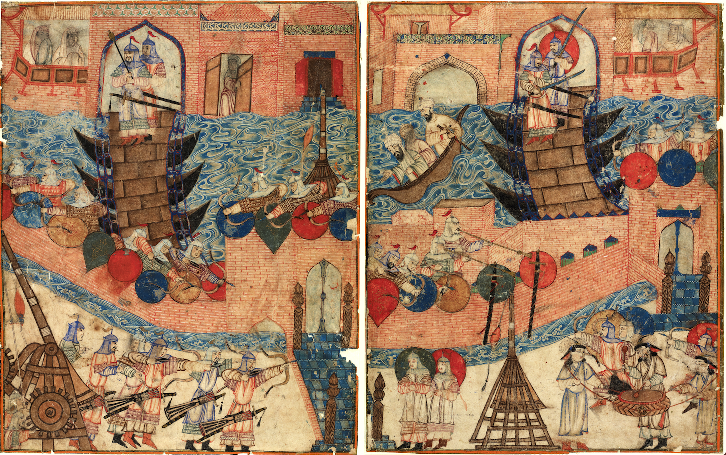
In 1219 the Mongol armies of Genghis Khan swept into Iran. They destroyed cities, annihilated populations and left a psychological wound that would fester for centuries. The historian Ibn al-Athir, writing in Mosul, could barely bring himself to record it: “They slew women, men and children. They split open the bellies of pregnant women and killed the foetuses.”[1] Historians regard the Mongol invasions as a catastrophe in the political and social history of Iran.[2]
Eight centuries later Iran has been invaded again. Two and a half years after the genocide in Gaza and ethnic cleansing in the West Bank and Lebanon, on 28 February 2026, in the middle of nuclear negotiations and less than nine months after their twelve-day assault of June 2025, the United States and Israel launched a second war of aggression on Iran. According to Abbas Masjedi, head of Iran’s Legal Medicine Organization, the forty days of bombing that followed killed at least 3,375 people, 383 of them aged eighteen or under.[3] A later official count put the dead at 3,468, of whom 1,460, about 45 per cent, were civilians.[4]
We can set these two invasions side by side. The parallels are real: both aggressors claimed a mandate that placed them above any law and were supremacists, both used terror as an instrument, and both attacked the systems that sustain life. But the difference matters more.
The Mongols conquered Iran. The invaders of 2026 have not, and their military aggression has failed. This is not only an Iranian view or one shared in the Global South. Robert Kagan, a co-founder of the Project for the New American Century and one of the leading advocates of the 2003 invasion of Iraq, wrote in May that the United States had been checkmated in Iran and had suffered a defeat that ‘can neither be repaired nor ignored’.[5] A main reason for this entirely different outcome, I shall argue, lies in what Iranian society made of itself in the centuries after the Mongol catastrophe.
I. A mandate above the law
Genghis Khan believed that the Eternal Sky, Möngke Tengri, had given him the earth to conquer. His code, the Yasa, divided the world into those who submitted and those who were to be destroyed.
Today’s aggressors also speak the language of mandate. Israeli ministers openly invoke a scriptural “Greater Israel”. Benjamin Netanyahu cited the biblical injunction against Amalek as the assault on Gaza began. In the United States, a Christian Zionist current with real influence in the Trump administration treats unconditional support for Israel as a theological duty rather than a matter of policy.
The secular version was set out with unusual candour at the Munich Security Conference in February 2026, two weeks before the bombing began. The US Secretary of State, Marco Rubio, celebrated five centuries in which the West had gone out to “settle new continents” and “build vast empires extending out across the globe”, and lamented that those empires had entered “terminal decline, accelerated by godless communist revolutions and by anti-colonial uprisings”.[6] Decolonisation was presented as a loss to be reversed. Iran, whose 1979 revolution was above all an assertion of independence, is the most stubborn obstacle to that reversal.
II. Terror and the destruction of what sustains life
The Mongols understood terror as a weapon. The Iranian historian, Ata-Malik Juvaini, who later served them, describes cities massacred to the last inhabitant, with survivors sent ahead to spread fear.[7] They also wrecked the qanats, the underground irrigation channels on which the agriculture of Khurasan depended, turning fertile regions into desert for generations.[8] Ira Lapidus summarises the result: the first impact of the invasions “was disastrous and amounted to a holocaust. The populations of many cities and towns were systematically exterminated. Whole regions were depopulated.”[9]
The war of 2026 opened with a “decapitation” strike that killed Iran’s head of state, Ayatollah Ali Khamenei, together with members of his family including his 14-month granddaughter and dozens of Iranian political and military leaders. In the southern city of Minab, missiles struck the Shajareh Tayyebeh primary school while classes were in session, and struck again as parents and rescuers gathered. Iranian officials put the dead at 168, among them 120 pupils, boys and girls, and 26 teachers; independent reconstructions have attributed the attack to American Tomahawk missiles.[10] Iran’s UN envoy reported that by 10 March more than 9,600 civilian sites had been hit, including some 7,900 homes, 65 schools and 32 medical facilities.[11] Strikes on four oil depots in and around Tehran on 7 March produced black, toxic rain over the capital, and the head of the World Health Organization warned of hazards that “can have severe health impacts especially on children, older people, and people with pre-existing medical conditions”.[12] Amnesty International said that such strikes on energy infrastructure “carry a substantial risk of violating international humanitarian law and, in some cases, could amount to war crimes”.[13] UNESCO-listed sites, among them the Golestan Palace in Tehran and Chehel Sotoun in Isfahan, were damaged.[14]
The two cases differ in scale and duration: the ruin of the qanats depopulated whole regions for generations, while the bombing of 2026 lasted weeks. What they share is the target. To strike water, power, fuel and hospitals is to attack a population’s capacity to go on living where it lives.
There is one respect in which the modern aggressors compare badly even with the Mongols. Genghis Khan had a grievance, however cynically he used it: the Khwarazmshah’s governor had massacred a Mongol trade caravan of some 450 merchants, and the envoys sent to demand redress were killed.[15] He was already bent on expansion westward, and the massacre gave him his pretext; but the grievance itself was real.
The attackers of 28 February offered justifications of their own: an imminent threat, and a nuclear programme that had to be stopped. Neither survives the administration’s own record. The Director of National Intelligence told the Senate in written testimony that Iran’s enrichment programme had been ‘obliterated’ in June 2025 and that there had been ‘no efforts’ to rebuild it. [16]The timing tells against both as well. The attack came while Iranian and American negotiators were meeting in Geneva. Hours earlier Oman’s foreign minister, the mediator, had said publicly that Iran had offered unprecedented concessions and that an agreement was within reach. The director of the US National Counterterrorism Center, Joe Kent, resigned on 17 March, stating that “Iran posed no imminent threat to our nation, and it is clear that we started this war due to pressure from Israel and its powerful American lobby”.[17] The Mongols knew no law but their own. The United States and Israel are bound by a UN Charter that permits force only in self-defence against armed attack or with the authority of the Security Council.
III. Why the Mongols succeeded: a divided house
Mongol military power does not by itself explain the fall of Iran. The country they entered was already divided against itself. Iran was at the time majority Sunni. For a century before the invasion, the Hanafi and Shafi’i schools of Sunni Islam had fought bloody, protracted battles for control of the great cities: Nishapur, Rey, Hamedan, Isfahan. Richard Bulliet has shown how far this went in Nishapur. When the Ghuzz tribes attacked, the two factions, rather than unite, fell upon each other until the city lay in ruins.[18]
The court was no better. Shah Muhammad of Khwarazm was locked in a struggle with his mother, Terken Khatun, who commanded the loyalty of his senior commanders and his elite Turkic cavalry. Genghis Khan’s intelligence service knew of the feud and exploited it, circulating forged letters that suggested the Queen Mother’s generals had gone over to the Mongols.[19] The Khwarazmian forces stayed dispersed in separate garrisons and were destroyed one by one. The Shah himself fled, urging his subjects to do the same.
In several cities sectarian rivalry opened the gates. And once resistance had been crushed, some of the ablest Iranians of the age entered the conquerors’ service. Nasir al-Din Tusi joined Hulegu’s court and built the Maragheh observatory; the Juvaini family became ministers of the Ilkhans.[20] As Shirin Bayani has argued, this was partly an effort to soften Mongol rule and preserve Iranian culture and administration.[21] But it was the accommodation of the defeated, made after the possibility of an independent state had vanished.
IV. The long answer: trauma, Shi’ism and the making of resistance
The psychological damage outlasted the Ilkhans. The fourteenth-century satirist Obayd Zakani drew a society in which wisdom, courage and justice had been abandoned for avarice and cruelty.[22] For centuries afterwards Iranian cities were disfigured by the Haydari-Ni’mati conflicts, ritualised street battles between two urban factions with no discernible material or doctrinal quarrel.[23] I have argued elsewhere that these fights were a re-enactment of the original trauma, a collective venting of inherited pain.[24]
Yet the same catastrophe set in motion Iran’s recovery, and here I come to the central claim of this essay. I first set it out in 2010, in a peer-reviewed article that introduced what I called the Trauma Hypothesis: the spread of Twelver Shi’ism in Iran was in significant part a response to the Mongol trauma.[25] Three things support it. The destruction of the Abbasid Caliphate in 1258 discredited the old order and seemed to vindicate the Shi’a teaching that unjust rulers bring ruin. The mourning rituals of Ashura gave survivors a sanctioned form for grief and helped rebuild social bonds. The expectation of the Mahdi offered hope to people who had none. Sufi lodges, which sheltered and fed a shattered population, became the channel: for two centuries a syncretic “Sunni-Shi’i” piety flourished, in which nominal Sunnis venerated the Shia Imams, and several Sufi orders, including that of Sheikh Safi al-Din of Ardabil, eventually became Shi’a. This was not a religion of resignation. The Sarbedaran, who threw off Mongol rule in fourteenth-century Khurasan, fought under a Shi’a banner.
Trauma does not explain everything. Shi’a communities in Qom, Kashan and Sabzevar long predated the Mongols, the doctrine had its own scholarly development, and it took the organised and often coercive power of the Safavid state to make Twelver Shi’ism the faith of the majority. But state power needs soil to work in. My claim is that two centuries of grief, and of the rituals that gave it form, prepared that soil.
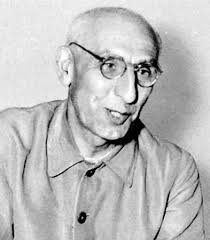
When the Safavids made Twelver Shi’ism the religion of state in the early sixteenth century, they gave institutional form, by persuasion and by force, to something that had been growing since the invasions. And when imperial pressure returned in modern dress, it was this tradition that answered. In the Tobacco Protest of 1891–92 a fatwa by Mirza Hasan Shirazi produced a nationwide boycott that forced the Shah to cancel a British monopoly. In the Constitutional Revolution of 1906 clergy, merchants and intellectuals together demanded a parliament. After the MI6–CIA coup of 1953 overthrew Mohammad Mossadegh for nationalising Iran’s oil, the secular nationalist movement was broken, but the clerical network survived. In October 1964 Ayatollah Khomeini denounced the law granting US military personnel immunity from Iranian courts, saying it had reduced Iranians to a status lower than that of an American’s dog.[26] He was exiled within days.
Fifteen years later the revolution he led brought down the Shah. The Islamic revolution of 1979 is counted, with the French, Russian and Chinese revolutions, among the great social revolutions of modern history, and in the share of the population it brought into the streets it may have surpassed them all, even according to Western academic sociologists with no stake in flattering it.[27]
Read in this light, 1979 was more than a change of regime. It was the culmination of a centuries-long process by which a traumatised society built a religious and political identity and united leadership able to refuse foreign domination. The narrative of Karbala, of Imam Hussein standing against an overwhelming army, gave that refusal its form.
V. The prelude: a house the empire thought ready to fall
After two and a half years of live-streamed genocide in Gaza (October 2023-Februay 2026), ethnic cleansing in the West Bank and southern Lebanon, and the illegal twelve-day war of aggression by Israel and the United States against Iran in June 2025, all of it mostly unpunished, the planners of 28 February had every reason to think they could act without consequence.[28] They evidently expected a Khwarazmian collapse: kill the leader and the house will fall.
They had some illusions for hope. Iran is not a society without differences — and the empire has always sought to hijack legitimate grievances and turn them into violence against the Islamic Republic. The death of Mahsa Amini in custody in 2022 brought large protests, and in practice the state has since retreated from enforcing the dress code. In late December 2025, after a currency collapse, shopkeepers began peaceful protests. Within days these had turned violent: by the government’s account, armed groups hijacked them and burned ambulances, fire engines and mosques. The authorities put the dead at 3,117, including a large number of members of the security forces. On 1 February they published the names and partial national identity numbers of 2,986 of them and opened a website for the public to report anyone missing.[29]The figures given abroad vary enormously. The US-based Human Rights Activists News Agency, known for its pro-western bias, says it has confirmed just over 7,000 deaths without providing any evidence.[30] Mr Trump first said 32,000 and then, in April, 45,000, offering evidence for neither. [31] The official list has its western media critics. But it is the only one published in full, name by name, and open to challenge.
The Iranian government attributes the violence to armed, foreign-backed infiltrators, and it has provided compelling evidence for this claim — much of it supplied by the empire’s own officials and agencies. The US Treasury Secretary, Scott Bessent, told the Senate in February that Washington had ‘created a dollar shortage’ in Iran, that the currency had gone into freefall as a result, and that this was why Iranians were out on the street. On 29 December a Persian-language account attributed to Mossad told protesters, ‘We are with you in the field’[32], and days later Mike Pompeo, the former CIA director, sent New Year greetings to ‘every Mossad agent walking beside them’[33]. In April, Trump said that the United States had sent ‘a lot of guns’ for the protesters, though he complained that the intermediaries had kept them[34]. Nor are these only words. The Wall Street Journal has reported that the United States secretly sent some 6,000 Starlink satellite terminals into Iran for anti-government activists, and Iran’s Intelligence Ministry announced the seizure of American-made weapons from armed cells in January and of hundreds of Starlink terminals in March.[35]
VI. 2026: the invasion that did not break but united Iran
What the aggressors did not understand is the difference between a quarrel within a house and an attack upon it. The assassination of the Supreme Leader produced mass demonstrations of defiance, not a rush for the exits. The dead of Minab were mourned in the idiom of Ashura. The imperial aggression united the majority of Iranians against the aggressors and a large section of the population shifted its position to support their government and the new leadership. Night after night crowds have gathered in cities, towns and villages all across the country and the cry of “Allahu Akbar”, which in 1978 rose from the rooftops against the Shah, was heard again under the missiles. Even the Guardian, which like other western mainstream media labels the Iranian government the ‘Iranian regime had to concede this fact.[36] In July the funeral of Ayatollah Khamenei drew millions of mourners to the streets of Tehran, Qom and Mashhad In Iran and in the cities of Najaf and Krabala in Iraq; Iranian officials put the total across all the ceremonies in both Iran and Iraq at more than 41 million and even the US news network CNN, despite the usual imperial narrative against Iran, puts it at millions.[37] In September hundreds of thousands more marched through Tehran pledging to defend the country.[38] The exiled monarchists and the MEK, who cheered the US and Israeli bombing, found no visible following inside Iran.
Cohesion alone did not decide the outcome. The aims voiced in Washington included the destruction of Iran’s missiles and navy, an end to enrichment, the weakening of its regional allies and, in Trump’s words of 6 March, “unconditional surrender”; from the start he also urged Iranians to take over their government.[39] Iran’s military and infrastructure clearly suffered some damage. But most of its missile and drones capability survived to keep striking, and by closing the Strait of Hormuz to hostile shipping it acquired a hold on the world economy.
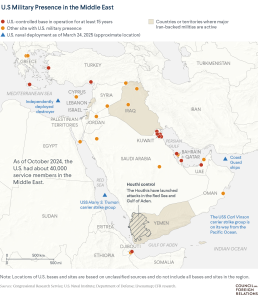
Iranian missiles and drones also did what no adversary had done in decades: they made American bases in the Persian Gulf unsafe and seriously damaged. By late March many of the thirteen bases used by US forces were reported to be all but uninhabitable, thousands of troops had been dispersed to hotels and as far away as Europe, and the headquarters of the US 5th Fleet was later moved from Bahrain to Florida.[40] And when the ceasefire came on 8 April, it came, by Tehran’s account, at Washington’s request, conveyed through Pakistan.[41]
Weapons and geography, however, are leverage only if a state keeps functioning under bombardment and its people are willing to bear the cost of using them. The Khwarazmshah had large armies too. This is where the history matters: after forty days the government had not fallen and Iran had not capitulated on any of those demands. Every evening huge crowds of Iranians would rally in defiance of the US and Israeli aggression and in support of the armed forces and the Lebanese resistance in the streets and squares all over Iran, remaining steadfast even under missile attacks in nearby neighborhoods.
As the collapse of the Islamic Republic utterly failed to arrive, the purpose of the war began to change. In its first hours, Trump had urged Iranians to take over their government; a week later he demanded unconditional surrender; a week after that he told an interviewer that it did not matter whether Tehran said it had surrendered. On 20 March he declared the war militarily decided, and the next day he announced a new list of conditions for ending it. By then a goal had appeared that no one had mentioned on 28 February: the reopening of the Strait of Hormuz, which had been open until the war closed it.[42]
On 7 April, Trump announced that ‘a whole civilization will die tonight’ unless Iran met his deadline, having threatened to destroy every power plant and bridge in the country. The threat was itself unlawful. The laws of war prohibit not only attacks on civilians but ‘threats of violence the primary purpose of which is to spread terror among the civilian population’, and legal experts said at the time that to announce the death of a civilization was a war crime in its own right.[43] That day tens of thousands of Iranians, answering an appeal to the young, formed human chains around power stations and bridges from Tabriz to Ahvaz.[44] The deadline passed; the bombs did not fall; within hours there was a ceasefire. Mr Trump has gone on making such threats all the same, most recently from the rostrum of the United Nations General Assembly on 22 September, where he told the assembled heads of state that he must decide whether to make a deal with Iran or ‘annihilate the Islamic Republic and do it quickly’.[45]
VII- Islamabad MOU: US ‘Surrender Document’
The ceasefire eventually led to the Islamabad Memorandum of Understanding (MOU), which was signed on 17 June by Trump. It declared an immediate and permanent end to military operations on all fronts, including Lebanon, and gave the parties sixty days to negotiate a final deal. The United States undertook to lift its blockade, to issue waivers for Iranian oil exports, to terminate sanctions on an agreed schedule and to develop a reconstruction plan of at least $300 billion. Iran reaffirmed that it would not seek nuclear weapons, agreed to resolve the disposition of its stockpiled enriched material, with down-blending under IAEA supervision as the minimum, and undertook to restore free commercial passage through the Strait for sixty days.[46] The text of the MOU set no limit on missiles and required no immediate end to enrichment, which was left to the final negotiation. John Mearsheimer, professor of political science at the University of Chicago and the leading American scholar of the realist school, has called the Memorandum ‘a surrender document’, signed because the United States had lost the war.[47]
The Strait was where it broke. Paragraph 5 gave Iran the task of arranging the safe passage of commercial vessels, ‘with no charge for 60 days only’, and of working out the Strait’s future administration with Oman. Iran opened a northern corridor through its own waters and notified the International Maritime Organization. Within days, however, a second route had been set up along the Omani coast, with the backing and naval protection of the United States, and ships were directed to it.[48]Tehran called this a clear violation of the Memorandum, since it took the management of the Strait out of Iran’s hands, and declared that it would not recognise the southern route ‘even for one hour’.[49]
On 8 July fighting resumed in the Strait: Washington says Iran attacked commercial vessels; Tehran says the United States had already breached the text by withholding frozen assets and promoting a shipping corridor outside the agreed channel. A further thirteen days of American strikes changed nothing of substance. As I write, talks are stalled, Trump has rejected Iran’s latest proposal and speaks of renewed strikes, and the Strait remains the hinge of the world economy.[50] The war is not over, and Iranians have paid for their endurance with thousands of lives.
Nor have Iran’s allies been cut away. In Yemen the Ansarallah movement, after Sana’a airport was bombed in July by Saudi-backed forces, launched an offensive in September that routed those forces along the Red Sea coast and gave it control of the Bab al-Mandab strait, the second of the region’s great maritime chokepoints.[51]
The conclusion is hard to avoid. An illegal war of aggression, launched to bring down a government and disarm a country, has been defeated by an Iran much more united than before the war. What remains is a refusal to admit it. Trump and the imperial establishment he speaks for cannot concede defeat, and so the war has not ended, while the rest of the world pays. With the Strait of Hormuz closed, crude oil, at around $70 a barrel before the war, has at times passed $110 and was still above $90 in September. Diesel, on which farming, freight and industry depend, has risen further still: in the United States it reached the highest price ever recorded, $5.85 a gallon, against less than $4 when the war began.[52]
There is a darker lesson too, with no Mongol parallel. Two nuclear-armed states have twice bombed a signatory of the Non-Proliferation Treaty whose facilities were under IAEA inspection. The message to every government watching is that safety lies in the bomb, not in the treaty. If the non-proliferation order dies, it will have been killed by those who claim to defend it.
The comparison with the thirteenth century can now be drawn. The Mongols needed two years to turn the Khwarazmian empire into a graveyard and a tributary. They found a country split between two warring schools of the same faith, whose adherents would sooner destroy each other’s quarters than defend their city together, and a court in which the Shah and his mother commanded rival armies. Its ruler fled; its generals were picked off one by one; its cities opened their gates out of hatred for their neighbours.
The Iran of 2026 was a different country. Its head of state was killed in the first hour of the war, and within days a successor was in place, the armed forces were fighting under a single command, and the state went on functioning under bombardment. Its people, for all their differences with one another and with their rulers, did not turn on each other; they closed ranks. That is the difference eight centuries have made, and it is the reason that, after eight months, the most powerful military alliance in history has utterly failed to force Iran’s capitulation. A divided Iran was conquered. A united Iran has defeated the aggression against it.
VIII. A warning from history
None of this is cause for complacency, and I end with a warning addressed to Iranians.
The legacy of the Mongol trauma is not entirely behind us. The Haydari-Ni’mati street battles are gone, but their habit of mind survives: the tendency for ordinary political differences to harden into two camps, each of which sees the other as an enemy to be destroyed, not a fellow citizen who thinks differently. We saw it in the disputed election of 2009. We may be seeing it again in the bitter argument over whether and how to negotiate with the United States.
It was exactly this kind of division that Genghis Khan found and used. Hanafi against Shafi’i, the Shah against his mother: the invader did not create those quarrels; he only had to widen them. The solidarity that has held since February is the country’s real deterrent, and it was hard won. To keep it, we need to recognise binary thinking for what it is, an old wound and not a political virtue, and to refuse to turn disagreement into enmity.
The first invasion found a divided house and left a broken people. The second has so far found a people able to close ranks against an attacker. Preserving that solidarity — while leaving room for honest disagreement among ourselves — is now an imperative.
Notes
[1] Izz al-Din Ibn al-Athir, The Chronicle of Ibn al-Athir for the Crusading Period from al-Kāmil fī’l-Ta’rīkh, Part 3: The Years 589–629/1193–1231: The Ayyubids after Saladin and the Mongol Menace, trans. D. S. Richards (Aldershot: Ashgate, 2008), p. 202; quoted in Abbas Edalat, “Trauma Hypothesis: The Enduring Legacy of the Mongol Catastrophe on the Political, Social and Scientific History of Iran” (Imperial College London, 2010, revised 2013), p. 11, https://www.doc.ic.ac.uk/~ae/papers/Mongols-8-3-13.pdf. The original Persian version appeared in Bukhara 13, nos. 77–78 (September–December 2010).
[2] Edalat, “Trauma Hypothesis”.
[3] Abbas Masjedi, head of the Iranian Legal Medicine Organization, quoted by Mizan News Agency (Tehran), April 2026; reported in Associated Press, “Over 3,300 people have died in Iran during war”, 20 April 2026, https://www.washingtontimes.com/news/2026/apr/20/iran-says-3300-people-died-iran-war/.
[4] Tasnim News Agency, “Half of Victims in US-Israeli War on Iran Were Civilians: Official”, 26 April 2026, https://tasnimnews.ir/3575688, reporting figures from the Foundation of Martyrs and Veterans Affairs; see also Tehran Times, “Martyrs: 45 percent civilians”, 26 April 2026.
[5] Robert Kagan, “Checkmate in Iran”, The Atlantic, 10 May 2026.
[6] Marco Rubio, remarks at the 62nd Munich Security Conference, Munich, 14 February 2026, transcript published by the US Department of State, https://www.state.gov/releases/office-of-the-spokesperson/2026/02/secretary-of-state-marco-rubio-at-the-munich-security-conference
[7] Ata-Malik Juvaini, Genghis Khan: The History of the World-Conqueror, trans. J. A. Boyle (Manchester: Manchester University Press, 1997; first published in 2 vols, 1958), p. 107.
[8] Juvaini, World-Conqueror, pp. 107–8; Rashid al-Din Fazl-Allah, Jāmi’ al-tawārīkh, ed. Muhammad Rawshan and Mustafa Musavi (Tehran: Nashr-i Alburz, 1373/1994), vol. 1, p. 443.
[9] Ira M. Lapidus, A History of Islamic Societies, 2nd ed. (Cambridge: Cambridge University Press, 2002), p. 226.
[10] Press TV, “Minab buries 62 pieces of 32 children massacred in Feb. 28 US strike on school”, 22 July 2026, https://www.presstv.co.uk/Detail/2026/07/22/772765/Newly-recovered-remains-of-32-Minab-school-students-laid-rest; Press TV, “Minab’s school bell rings through grief as 168 empty desks stand as silent witnesses”, 25 September 2026, https://www.presstv.co.uk/Detail/2026/09/25/776960/Minab. The Minab prosecutor counted 73 boys and 47 girls among the pupils killed (Tehran Times, 26 April 2026). For independent reconstructions see Julia Frankel, “The AP reconstructs a U.S. strike that killed over 100 Iranian children”, Associated Press, 1 July 2026, and Drop Site News, “Massacre at Minab: The School That Became a Grave”, October 2026, https://www.dropsitenews.com/p/minab-school-massacre-iran-war-children-families, which reports that 156 of the 168 dead have been identified. See also UNICEF, “The brutality of war measured in children’s lives as hostilities escalate in Iran”, March 2026, https://www.unicef.org/press-releases/brutality-war-measured-childrens-lives-hostilities-escalate-iran.
[11] Amir Saeid Iravani, Permanent Representative of Iran to the United Nations, remarks at the Security Council media stakeout, New York, 10 March 2026, reported in AhlulBayt News Agency (ABNA), “Over 1,300 Civilians Martyred During US-Israeli Aggression on Iran”, 11 March 2026, https://en.abna24.com/news/1790867/Over-1-300-Civilians-Martyred-During-US-Israeli-Aggression-on. The figures are those of the Iranian Red Crescent Society: West Asia News Agency (WANA), “Nearly 9,700 Civilian Units Damaged in Recent Airstrikes in Iran”, 8 March 2026, https://wanaen.com/nearly-9700-civilian-units-damaged-in-recent-airstrikes-in-iran/.
[12] Tedros Adhanom Ghebreyesus, Director-General of the World Health Organization, statement on X, quoted in Al Jazeera, “WHO chief raises alarm after Israeli attacks on Iranian oil facilities”, 9 March 2026, https://www.aljazeera.com/news/2026/3/9/who-chief-raises-alarm-after-israeli-attacks-on-iranian-oil-facilities.
[13] Amnesty International UK, “Middle East: Millions at risk as Israel, US and Iran unlawfully target energy infrastructure”, March 2026, https://www.amnesty.org.uk/latest/middle-east-millions-at-risk-as-israel-us-and-iran-unlawfully-target-energy-infrastructure/. The statement is addressed to all parties to the conflict.
[14] Al Jazeera, “Are the US and Israel waging war on Iran’s cultural heritage?”, 17 March 2026, https://www.aljazeera.com/news/2026/3/17/are-the-us-and-israel-waging-war-on-irans-cultural-heritage, citing the Islamic Republic News Agency (IRNA) and the Ministry of Cultural Heritage, Tourism and Handicrafts, which counted at least 56 damaged museums and historic sites.
[15] Juvaini, World-Conqueror, pp. 78–80.
[16] Tulsi Gabbard, Director of National Intelligence, written testimony to the US Senate Select Committee on Intelligence, hearing on the 2026 Annual Threat Assessment, Washington, DC, 18 March 2026; quoted in Al Jazeera, “US intel chief Gabbard says Iran was not rebuilding enrichment prior to war”, 18 March 2026, https://www.aljazeera.com/news/2026/3/18/us-intel-chief-gabbard-says-iran-was-not-rebuilding-enrichment-prior-to-war.
[17] Joe Kent, letter of resignation to President Trump, 17 March 2026; see Associated Press, “Top counterterrorism official Kent resigns over Trump’s Iran war, says Iran posed no imminent threat”, 17 March 2026.
[18] Richard W. Bulliet, The Patricians of Nishapur: A Study in Medieval Islamic Social History (Cambridge, MA: Harvard University Press, 1972), pp. 78–80.
[19] W. Barthold, Turkestan Down to the Mongol Invasion, 3rd ed. (London: Luzac for the E. J. W. Gibb Memorial Trust, 1968), ch. 4.
[20] Juvaini, World-Conqueror, pp. 657–60; Rashid al-Din, Jāmi’ al-tawārīkh, vol. 2, p. 728.
[21] Shirin Bayani, Dīn va dowlat dar Īrān-e ‘ahd-e Moghol [Religion and State in Iran in the Mongol Era], 3 vols (Tehran: Markaz-e Nashr-e Dāneshgāhi, 1381/2002), vol. 2, p. 83.
[22] Obayd Zakani, Akhlāq al-ashrāf, in Kolliyāt-e Obayd Zākāni, ed. Parviz Atabaki (Tehran, 1384/2006), pp. 317–43.
[23] Hossein Mirjafari, “The Ḥaydarī-Ni’matī Conflicts in Iran”, trans. J. R. Perry, Iranian Studies 12, nos. 3–4 (1979), pp. 135–62.
[24] Edalat, “Trauma Hypothesis”, pp. 22, 31–33.
[25] Edalat, “Trauma Hypothesis”, pp. 25-27.
[26] Ruhollah Khomeini, speech at Qom against the capitulation law, 26 October 1964, in Sahifeh-ye Imam, vol. 1 (Tehran: Institute for Compilation and Publication of Imam Khomeini’s Works, 1378/1999), p. 368.
[27] Theda Skocpol, “Rentier State and Shi’a Islam in the Iranian Revolution”, Theory and Society 11, no. 3 (1982), pp. 265–83; Charles Kurzman, The Unthinkable Revolution in Iran (Cambridge, MA: Harvard University Press, 2004).
[28] UN Independent International Commission of Inquiry on the Occupied Palestinian Territory, including East Jerusalem, and Israel, report of 16 September 2025; International Court of Justice, Application of the Convention on the Prevention and Punishment of the Crime of Genocide in the Gaza Strip (South Africa v. Israel), Order of 26 January 2024; Amnesty International, “‘You Feel Like You Are Subhuman’: Israel’s Genocide Against Palestinians in Gaza”, December 2024
[29] Office of the President of the Islamic Republic of Iran, list of those killed in the unrest, 1 February 2026; see TRT World, “Iran releases names of nearly 3,000 killed in protests”, 1 February 2026, and Al Jazeera, “Questions after Iran’s government releases victim list in protest killings”, 5 February 2026, https://www.aljazeera.com/news/2026/2/5/questions-after-irans-government-releases-victim-list-in-protest-killings.
[30] Human Rights Activists News Agency (HRANA) reported at least 7,015 people killed, including 6,508 protesters and 214 people affiliated with the government; cited in BBC News, “Iran students stage first large anti-government protests since deadly crackdown”, February 2026.
[31] Paul Wiseman, Jon Gambrell and Calvin Woodward, “FACT FOCUS: False claims Trump made as he addressed the nation about Iran”, Associated Press, 2 April 2026, https://www.usnews.com/news/us/articles/2026-04-01/fact-focus-false-claims-trump-made-as-he-addressed-the-nation-about-iran.
[32] The Jerusalem Post, “‘We are with you’: Mossad spurs Iran protests, says agents with demonstrators”, 29 December 2025, https://www.jpost.com/middle-east/iran-news/article-881733
[33] Mike Pompeo, post on X, early January 2026; reported in The Jerusalem Post, “‘Happy New Year to Iranians and Mossad agents beside them,’ Mike Pompeo says in social media post”, January 2026, and in WION, “Mike Pompeo says ‘Mossad agents’ are marching with Iranian protestors”, 3 January 2026, https://www.wionews.com/world/pompeo-mossad-agents-iran-protests-controversy-1767420580748.
[34] The Times of Israel, “‘I’m very upset’: Trump says US tried to arm Iranian protesters, but guns were diverted”, 6 April 2026, https://www.timesofisrael.com/im-very-upset-trump-says-us-tried-to-arm-iranian-protesters-but-guns-were-diverted/; Al Jazeera, “Trump says US armed Iranian dissidents via Kurds, Kurdish groups deny claim”, 6 April 2026.
[35] On the Starlink shipment, see The Wall Street Journal, “U.S. Smuggled Thousands of Starlink Terminals Into Iran After Protest Crackdown,” 11 February 2026, https://www.wsj.com/world/middle-east/u-s-smuggled-thousands-of-starlink-terminals-into-iran-after-protest-crackdown-69a8c74f. The article reports that the Trump administration covertly sent roughly 6,000 Starlink terminals into Iran following the January crackdown, the first time the U.S. had directly sent Starlink into the country . On the weapons, see the statement of Iran’s Ministry of Intelligence, 13 January 2026, reported in The Cradle, “Iranian intelligence seizes US-made weapons, explosives smuggled by western-backed rioters,” January 2026. On the March seizures, see the Ministry’s statement of 17 March 2026, reported by Mehr News Agency and Tasnim News Agency.
[36] The Guardian, 28 March 2026, https://www.theguardian.com/world/2026/mar/28/iran-pro-regime-demonstrations-detained-people.
[37] CNN, “Iran says millions are mourning Khamenei. That’s not the full picture”, 9 July 2026, https://www.cnn.com/2026/07/09/middleeast/iran-mourning-khamenei-not-the-full-picture-intl; for the official estimate of 41 to 43 million, see AhlulBayt News Agency (ABNA), “Report: 41-43 Million People Attended Imam Khamenei Funeral, Largest Procession in History”, July 2026, https://en.abna24.com/news/1838424/Report-41-43-Million-People-Attended-Imam-Khamenei-Funeral.
[38] Associated Press, “Iranians rally by the hundreds of thousands in biggest show of defiance since war began”, 18 September 2026, https://www.pbs.org/newshour/world/iranians-rally-by-the-hundreds-of-thousands-in-biggest-show-of-defiance-since-war-began.
[39] CBS News, “Trump’s goals for the Iran war and what he’s saying now”, June 2026, https://www.cbsnews.com/news/trump-goals-iran-war-and-what-hes-saying-now-nuclear-missiles-regime-change/; Al Jazeera, “‘No deal with Iran except unconditional surrender,’ Trump says”, 6 March 2026, https://aljazeera.com/news/2026/3/6/no-deal-with-iran-except-unconditional-surrender-trump-says.
[40] “Iran’s attacks force US troops to work remotely”, New York Times, 26 March 2026, reprinted in the Boston Globe, https://www.bostonglobe.com/2026/03/26/world/irans-attacks-force-us-troops-work-remotely; for the later damage count and the relocation of the 5th Fleet headquarters, see the Washington Post investigation of April–May 2026 on Iranian strikes on US military sites.
[41] Statement of the Supreme National Security Council of Iran, issued by Foreign Minister Abbas Araghchi, 7 April 2026.
[42] How Trump’s Iran war objectives have shifted over time”, NPR, 25 March 2026, https://www.kpbs.org/news/politics/2026/03/25/how-trumps-iran-war-objectives-have-shifted-over-time; “Changing Objectives, Changing Conditions: What Is Trump Really After in Iran?”, Future for Advanced Research and Studies (Abu Dhabi), 2026, https://futureuae.com/en-US/Mainpage/Item/10879/changing-objectives%2c-changing-conditions-what-is-trump-really-after-in-iran
[43] Associated Press, “Trump warns a ‘whole civilization will die tonight’ if a deal with Iran isn’t reached”, 7 April 2026. On the law, see Protocol Additional to the Geneva Conventions of 12 August 1949 (Protocol I), 8 June 1977, Article 51(2); International Committee of the Red Cross, Customary International Humanitarian Law, Rule 2; Prosecutor v. Galić, ICTY Appeals Chamber, Judgment, 30 November 2006.
[44] Eva Roytburg, “Iranians begin forming human chains around power plants ahead of Trump’s deadline, social media videos show”, Fortune, 7 April 2026, https://www.fortune.com/2026/04/07/iranian-human-chains-power-plants-trump-nuclear-weapon-civilization-will-die. See also Press TV and Mehr News Agency footage of the same day.
[45] Donald Trump, address to the 81st session of the United Nations General Assembly, New York, 22 September 2026; reported in Agence France-Presse, “Trump threatens to ‘annihilate’ Iran, attacks ICC in UN speech”, 22 September 2026, https://www.africanews.com/amp/2026/09/22/trump-threatens-to-annihilate-iran-attacks-icc-in-un-speech/; see also Responsible Statecraft, “In UN speech, Trump threatens to ‘annihilate’ Iran if no deal reached”, 22 September 2026, https://responsiblestatecraft.org/trump-unga-speech/
[46] “Islamabad Memorandum of Understanding between the United States of America and the Islamic Republic of Iran”, 17 June 2026, text as published by the American Presidency Project, University of California, Santa Barbara, https://www.presidency.ucsb.edu/documents/islamabad-memorandum-understanding-between-the-united-states-america-and-the-islamic.
[47] John J. Mearsheimer, “The US Cannot Defeat Iran”, John’s Substack, July 2026, on his conversation with Lt. Col. (ret.) Daniel Davis on “Deep Dive”, 10 July 2026; reprinted at Antiwar.com, 12 July 2026, https://blog.antiwar.com/?p=59997.
[48] Islamabad Memorandum, paragraph 5 (see note above); Marcus Hand, “Iran sabre rattles over Strait of Hormuz southern route”, Seatrade Maritime News, 25 June 2026, https://www.seatrade-maritime.com/security/iran-sabre-rattles-over-strait-of-hormuz-southern-route; Al Jazeera, “Iran, Oman agree on new temporary route in Hormuz”, 26 August 2026, https://www.aljazeera.com/amp/economy/2026/8/26/top-official-says-iran-oman-have-agreed-new-temporary-hormuz-route.
[49] Tehran Times, “Iran rejects southern Strait of Hormuz shipping route”, 29 July 2026, reporting an interview with Deputy Foreign Minister Kazem Gharibabadi on IRIB.
[50] The Hill, “Donald Trump rejects Iran 7-day proposal, considers renewed military strikes after midterms”, 25 September 2026, https://thehill.com/homenews/administration/6113000-trump-iran-proposal-ceasefire/.
[51] Agence France-Presse, “Yemen’s Houthis complete takeover of Bab al-Mandab area: govt official to AFP”, 11 September 2026; Tasnim News Agency, “Saudi Strikes Hit Al-Mokha Airport After Yemen Forces Expand Control Near Bab al-Mandeb”, 11 September 2026, https://www.tasnimnews.ir/en/news/2026/09/11/3693984/saudi-strikes-hit-al-mokha-airport-after-yemen-forces-expand-control-near-bab-al-mandeb. On the airport strike, see Associated Press, “Houthi rebels in Yemen say Sanaa International Airport is hit by Saudi strikes”, 13 July 2026.
[52] Al Jazeera, “Diesel price hits all-time high in US amid Iran war woes”, 4 September 2026, https://www.aljazeera.com/news/2026/09/04/diesel-price-hits-all-time-high-in-us-amid-iran-war-woes, citing the American Automobile Association; for the price at the start of March, see US Energy Information Administration weekly on-highway diesel data, reported in Trucking Dive, March 2026; for the crude oil peak, see bne IntelliNews (Business News Europe), “Iran says Strait of Hormuz transit subject to its rules,” 10 July 2026, https://www.intellinews.com/iran-says-strait-of-hormuz-transit-subject-to-its-rules-453720/.